
A sewer line draining again is welcome news. It does not answer every question about the pipe. If roots were actually found, understanding the difference between removing an obstruction and addressing an entry point helps you evaluate the next recommendation.
This guide is for homeowners around the St. Croix Valley comparing cleaning, inspection and further assessment. It cannot identify what is inside your line from a gurgle, a nearby tree or the age of the house.
Why can roots return after a line has been cleaned?
Roots can enter through a defect or opening in a sewer line. The EPA identifies root intrusion as one possible cause of sewer blockages, alongside other causes. A repeated blockage alone does not establish which one is present.
Removing material from inside a pipe and repairing an opening are different tasks. If an entry point remains, clearing the roots does not by itself establish that the underlying condition has been resolved. Ask whether the recommendation concerns today’s obstruction, future monitoring or a documented pipe defect.
Seattle Public Utilities describes different severities of root intrusion and different inspection or cleaning needs. Those examples explain why a finding needs context. They do not establish a maintenance schedule for a home in Wisconsin or Minnesota.
Do not make a tree-removal decision from a sewer symptom alone. Ask where roots entered and what evidence supports proposed pipe or tree work before involving the appropriate specialist.
Does a recurring clog prove the pipe needs replacement?
No. Recurrence is a reason to gather better information, not a complete diagnosis. Ask for the specific observation behind a repair recommendation and which portion of the line it describes. Distinguish an observed opening or obstruction from a suspected cause that still needs investigation.
A camera can help examine accessible piping, but visibility matters. Seattle’s sewer-repair guidance explains that standing water can prevent a useful view and that inspection can be more informative after a blockage is cleared. A clear view of one section does not establish the condition of an unseen section.
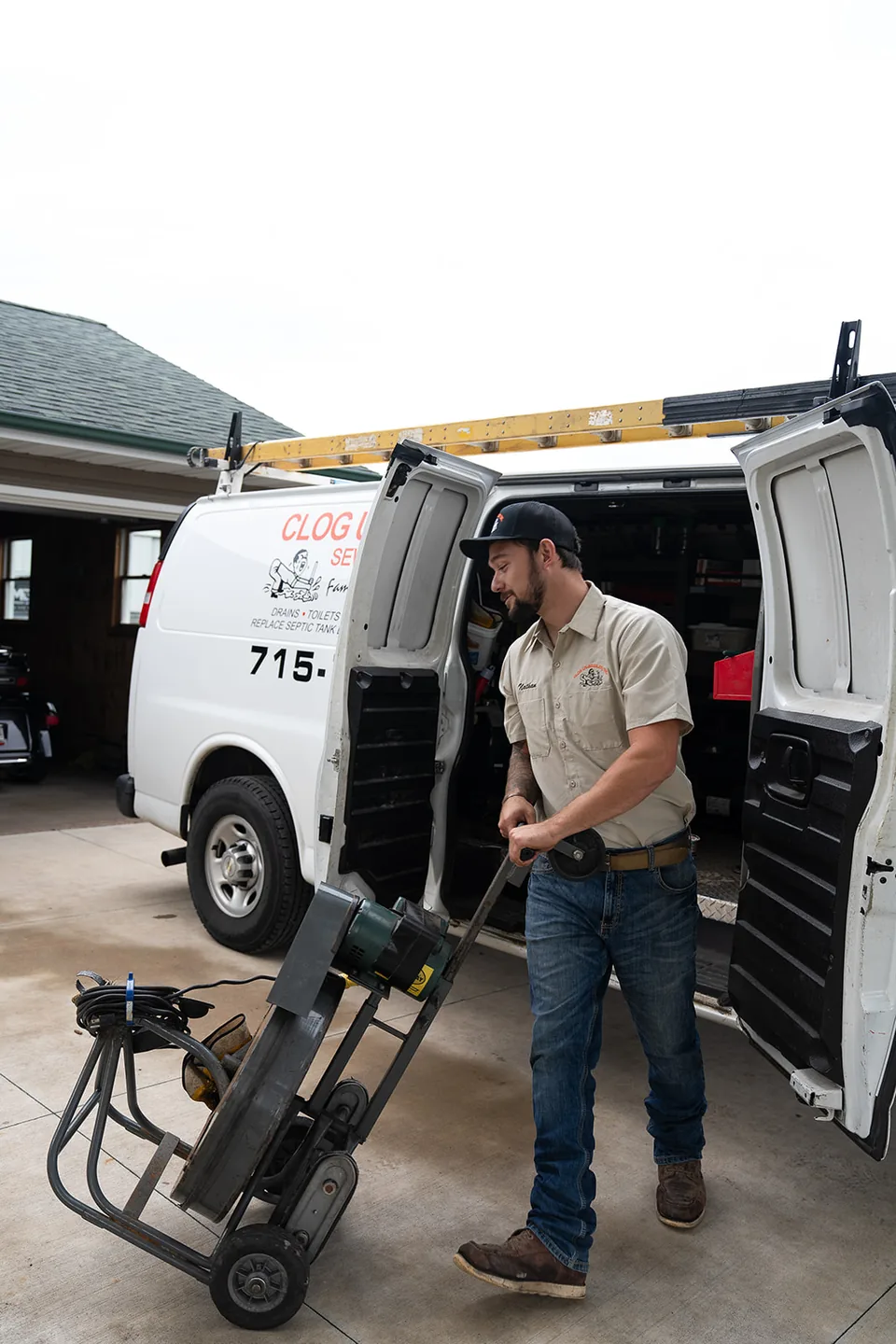
Clog Un-Boggler offers tree root removal from affected drain and sewer piping. Ask what cleaning could address and what a separate assessment would establish. Do not assume root-removal service includes excavation, lining, pipe replacement or a particular recording or report.
What should I ask about the findings?
Use this question framework to separate what is known from the next decision. It is a conversation aid, not a diagnosis or a prescribed treatment plan.
| What you know | What to ask next |
|---|---|
| Roots were documented | Where were they found, and what could be seen after cleaning? |
| The clog returned; the cause is unclear | What evidence would distinguish roots from another obstruction? |
| A repair is recommended | Which observed defect supports it, and who would perform that work? |
| Maintenance is recommended | What finding supports the proposed timing and reassessment? |
Keep the answers with the actual invoice, findings and any images or video supplied. If a provider uses a distance measurement, ask where that measurement starts. Write down uncertainty rather than turning a tentative explanation into a confirmed defect.
For more on visibility and access, see our sewer camera inspection service. Ask what information the proposed visit will provide before agreeing to it.
Is there a universal root-cleaning interval?
There is no single interval this article can responsibly assign to every pipe. Our root-removal service page recommends annual mainline cleaning for known recurring root growth. That is conditional guidance for that situation, not a finding about an uninspected line or a rule for every household drain.
Ask why a particular interval fits the documented condition, access and service history, when the provider would reassess it and what changes should prompt an earlier call. An onsite-system line may need a different plan; share the actual septic service history rather than assuming the mainline recommendation applies.
Do not use a neighbor’s schedule as proof of your own pipe’s needs. Keep a short record of when symptoms began, what service occurred and whether drainage changed afterward. Our guide to what to record when a clog returns covers that broader timeline without assuming roots are the cause.
Where should a local homeowner start during a backup?
A suspected public sewer problem and a known private-line root issue are different starting points. In Stillwater, if you suspect a sewer obstruction or backup and do not know where the blockage is, contact the City Sewer Department before a drain-cleaning company. Follow the City’s current sewer-backup instructions, including its request to notify the City after a sewer service has been cleaned.
That is Stillwater’s procedure, not a rule to apply automatically to every nearby municipality. For another address, check the utility serving it. Share any public-main findings with the private service provider. If sewage is already coming inside, use the immediate guidance in our floor-drain backup article; do not run more water to reproduce the problem.
The takeaway: separate clearing, evidence and follow-up
Start with what was actually found. Clearing an obstruction, viewing the accessible line and assessing a defect answer different questions. A return visit can be useful without automatically proving that earlier work failed or that the entire pipe needs replacement. Ask what remains unknown and what the proposed next step would resolve.
Keep the findings, timeline and scope together. That makes it easier to compare recommendations and decide whether the next conversation concerns cleaning, inspection, maintenance or work by a different specialist. A useful plan explains the reason for the next step rather than relying on fear or a universal schedule.
Clog Un-Boggler is the Somerset-based family business behind Drain Talk. To discuss a private drain or sewer issue, call (715) 760-5141 with the property address and any existing findings. Follow applicable municipal reporting instructions first.